

We have an excellent technical team, our products in quality and quantity will make you satisfied, welcome to buy


 |


Male&Femal Embossing Rollers/Frame
1.Raw materials#20, #45 and forge alloy steel 42GrMo38GrMoAI (for glass embossing is different)
2.Surface treatment: hard chrome plate coating, the hardness is HV900(normally HV500-600).
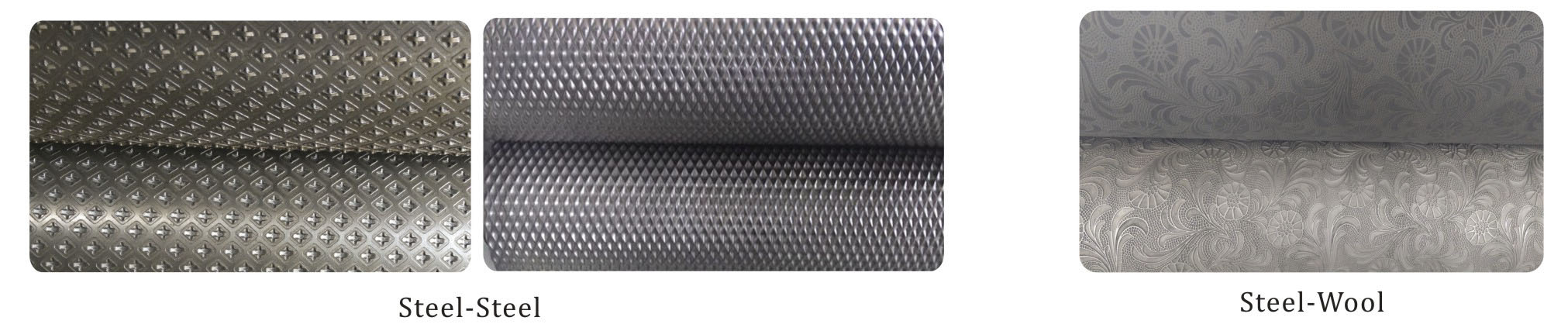
Specification and parameter:
Max. Diameter: Φ 1000mm,
Max length: 6000m;
Chrome plating thickness: 0.03-0.12mm
TIR: ≤ 0, 01mm;
Concentricity: ≤ 0, 01mm
Surface treatment: Sand finish, spray finish, chemical corrosion finish, engraving, laser curving, cutter curving...
Raw material: Seamless steel pipe, integrated forging 45# steel; 20# steel; 42CrMoA steel aloy, etc.
Shaft material: 45 steel, integrate forging;
Cooling water: Big screw pitch, multi flow or cross twin flow;
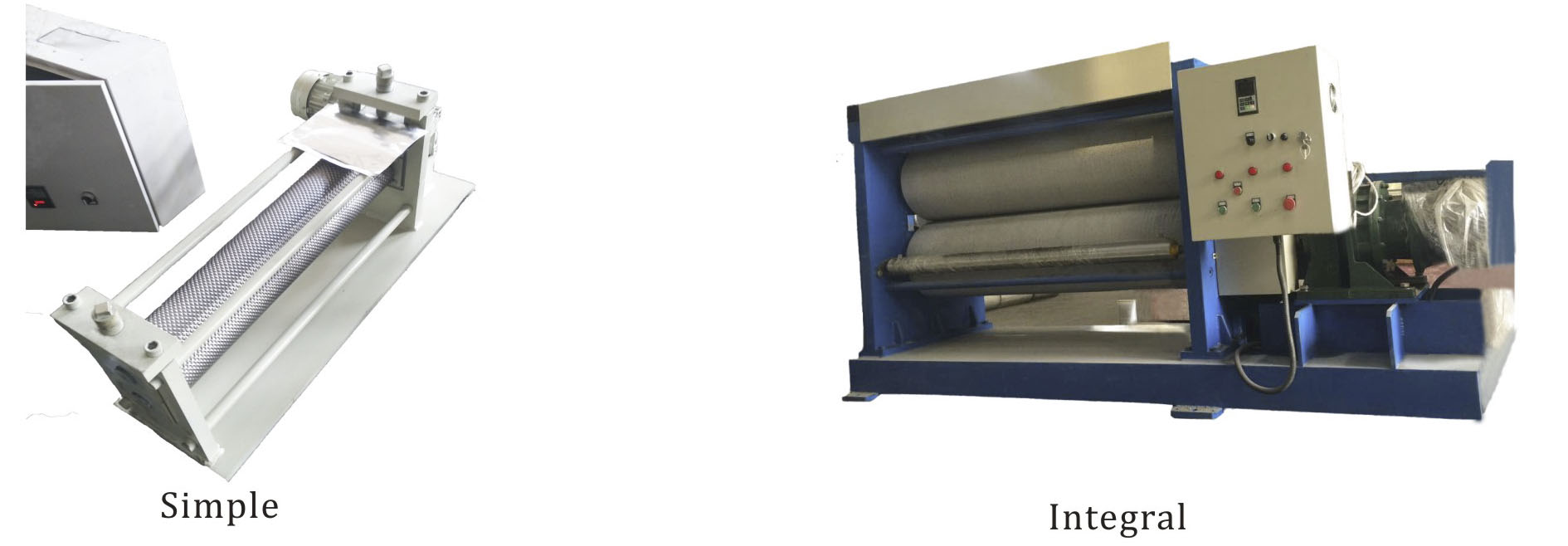
The embossing unit have two kind frame,one is simple frame and other is intergal.
Mainstream embossing machine group types and characteristics
*Mechanical Roller Embossing Unit: By applying mechanical pressure through engraved steel rollers and bottom rollers (such as wool paper rollers), raised and recessed textures are formed on the material surface. This technology is mature and commonly used in continuous sheet material processing, with typical units including unwinding, tension control, embossing, and winding.
*Ultrasonic embossing machine: Using high-frequency vibration waves to generate frictional heat between material molecules, and fusing and embossing under pressure. No need for needle or glue, able to complete welding, embossing, cutting and other processes in one go, with smooth edges and no burrs.
*High frequency/high-frequency embossing machine: Utilize high-frequency electromagnetic fields to generate heat through molecular friction inside plastic materials such as PVC and TPU, and use molds to press and shape them. For specific plastic materials, their processing effect and efficiency have unique advantages.
*Metal sheet embossing machine: By using large tonnage and high rigidity mechanical equipment, strong pressure is applied to metal sheets (such as steel plates and aluminum plates) to press anti slip patterns, decorative patterns, etc., which are usually integrated into metal processing production lines.
How to choose a suitable embossing unit:
Confirm material: Is your material non-woven fabric, plastic film, or metal sheet? The principles applicable to different materials (mechanical pressure, ultrasound, high frequency) are completely different.
Clarify the process objective: Do you only need to press patterns (decorative embossing), or do you need to weld, laminate, or cut them simultaneously (functional embossing)?
Evaluating customization needs: Embossed patterns (flower rollers) usually require customization. Some manufacturers provide powerful non-standard customization services, which can develop exclusive patterns based on your samples.


